



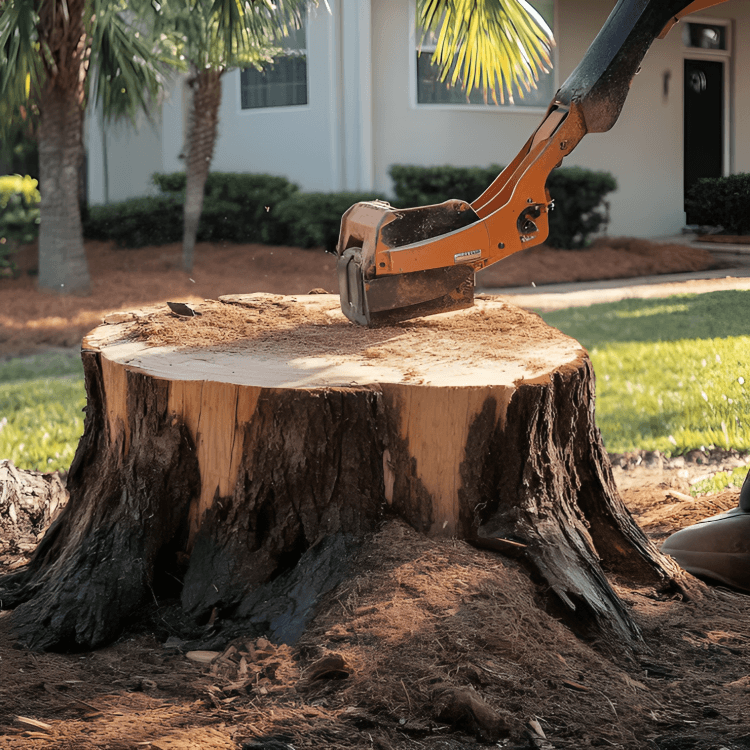
Removing a tree from your garden does not always mean the job is finished. The remaining tree stump and root system can continue to take up valuable space, interfere with landscaping and, in some circumstances, create problems for nearby surfaces, structures and planting.
Whether you are planning a new lawn, installing fencing, redesigning your garden or preparing for building work, professional tree stump removal in the UK can provide a practical way to clear the area safely and efficiently.
But what is the best way to remove a tree stump? The answer depends on the size and species of the tree, the location of the stump, access to the garden and what you intend to do with the area afterwards.
Why Remove a Tree Stump?
Leaving a stump in the ground may seem harmless, particularly if it has been cut close to ground level. However, there are several reasons why removing it can be worthwhile.
Improve Garden Safety
An exposed tree stump can become a trip hazard, particularly in areas where children play or where the garden is regularly used. Removing the stump creates a safer and more accessible outdoor space.
Make Lawn Maintenance Easier
Stumps can make mowing and strimming difficult. They can damage lawn equipment and force you to work around obstacles. Grinding the stump below ground level makes maintaining the surrounding lawn considerably easier.
Prepare for Landscaping
If you are planning to lay new turf, create flower beds, install paving or redesign your garden, an existing stump and its roots can get in the way. Removing or grinding the stump gives you greater flexibility when planning the space.
Install Fencing or Garden Structures
Tree stumps and extensive roots can interfere with fence posts, garden rooms, decking, patios and other landscaping features. Clearing the stump beforehand can make installation simpler and reduce the need to alter your plans.
Reduce the Risk of Tree Disease and Fungal Growth
A stump from a diseased tree may continue to harbour pathogens or fungal material after the tree has been removed. In some circumstances, decaying stumps can also provide a food source for fungi such as honey fungus, which can affect susceptible plants and trees.
If a tree was removed because of disease, it is particularly important to discuss the stump and surrounding root system with a suitably qualified professional before deciding how to deal with it.
Can Tree Roots Cause Problems?
Tree roots are an important consideration when removing a stump. Depending on the tree species, age, soil conditions and available space, roots can extend considerably beyond the immediate area surrounding the trunk.
Large or vigorous root systems can sometimes interact with hard landscaping, paths, patios, drainage systems and other structures. However, roots should not automatically be assumed to be responsible for structural damage. A professional assessment may be necessary where significant damage is suspected.
The extent of the root system also affects how difficult and expensive complete excavation is likely to be.
Common Types of Tree Root Systems
Tree roots vary considerably between species and understanding the likely root structure can help when considering stump removal.
Tap Root Systems
Trees with tap roots develop a dominant central root that grows downwards, alongside smaller lateral roots. Species that can develop tap-root characteristics include some oaks, pines and walnuts, although actual root development depends heavily on soil and growing conditions.
Heart Root Systems
Heart root systems consist of several substantial roots that grow both downwards and outwards from the base of the tree. Species such as birch, lime, sycamore and some oaks can develop this type of structure.
Flat or Shallow Root Systems
Some trees develop broad, relatively shallow root systems that spread horizontally through the upper layers of soil. These can make stump excavation more disruptive because roots may extend across a relatively large area.
It is important to remember that root structure is not determined by species alone. Soil type, drainage, available space, age and surrounding structures can all influence how a tree’s roots develop.
What Is the Best Way to Remove a Tree Stump?
There are several methods available for dealing with a tree stump, but they are not equally suitable for every situation.
For most domestic gardens, professional stump grinding is generally one of the most practical and least disruptive options.
1. Professional Stump Grinding
Stump grinding involves using specialist machinery to reduce the remaining stump to wood chips and grind it below the surrounding ground level.
The depth required depends on what you plan to do with the area. A relatively shallow grind may be sufficient if you simply want to cover the area with soil or turf, while deeper grinding may be preferable for planting or more substantial landscaping.
One of the main advantages of stump grinding is that it avoids the need to excavate the entire root system. This means significantly less soil disturbance and a lower risk of damaging nearby patios, paths, walls and other features.
The resulting wood chippings can sometimes be left on site and incorporated into the garden, used as mulch where appropriate or removed as green waste.
2. Stump Excavation
Another option is to physically excavate the stump and as much of the root system as practical.
This can be effective when complete removal is required, but it is usually much more invasive than grinding. Large stumps can have extensive root systems, requiring significant excavation and potentially heavy machinery.
Access can also be a major consideration. Narrow gates, steps, walls, fences and restricted garden access may prevent larger machinery from reaching the stump.
Excavation may therefore be more appropriate for particular projects rather than being the default solution for every domestic stump.
3. Chemical Stump Treatment
Chemical stump treatments are available for homeowners who want to encourage a stump to die and decay naturally. These products generally work over a considerably longer period than mechanical removal.
If using any stump treatment or weedkiller, always read and follow the manufacturer’s instructions carefully. Consider the surrounding plants, soil, pets, children and wildlife before applying any chemical product.
Chemical treatment is generally not the quickest option if you need the area cleared for immediate landscaping or construction work.
4. Burning a Tree Stump
Burning is sometimes suggested as a DIY stump-removal technique. However, this approach carries obvious fire and safety risks and may not remove the complete root system.
There is also a risk of underground roots continuing to burn or smoulder, particularly in dry conditions. For these reasons, burning is generally not the preferred approach for domestic stump removal.
5. Pulling a Stump Out
Smaller stumps may sometimes be removed using mechanical leverage or a suitable winching system.
However, this requires the correct equipment, secure anchoring and appropriate safety precautions. Pulling a stump can also disturb a considerable amount of surrounding soil and may damage nearby structures or underground services.
For larger stumps, professional mechanical removal is generally a safer and more controlled option.
How Much Does Tree Stump Grinding Cost in the UK?
The cost of tree stump removal in the UK can vary significantly. There is no single fixed price because every site is different.
Factors that can influence the cost include:
- The diameter and height of the stump
- The tree species and hardness of the wood
- The number of stumps being removed
- Access to the garden
- Width of gates, paths and alleyways
- Steps, walls or other obstacles
- The depth required for grinding
- The location of the stump
- Whether the stump is close to a building, fence or paved area
- The amount of wood and soil produced
- Whether the resulting waste needs to be removed
- Travel distance and availability of specialist equipment
A small, easily accessible stump may be relatively inexpensive to grind, whereas multiple large stumps in a difficult-to-access garden can cost considerably more.
Rather than relying on a generic online price, it is usually better to obtain a site-specific quotation from a professional stump grinding contractor.
Why Professional Stump Grinding Is Usually Recommended
Although stump grinders can be hired, using specialist machinery without appropriate experience can be dangerous.
Professional operators understand how to position the equipment, protect surrounding areas and manage the material produced during grinding. They can also assess the site for potential hazards before work begins.
Before grinding, the area should be checked for potential underground hazards such as utility services, drainage and other obstructions. Appropriate safety controls should also be used to protect people, buildings, vehicles and nearby property from flying debris.
Operators should use suitable personal protective equipment, including appropriate footwear, gloves, eye and face protection and other equipment required for the particular machinery and site conditions.
What Information Will a Stump Grinding Contractor Need?
When requesting a quotation, a professional contractor will normally need several details about the job.
Providing accurate information can make it easier to assess the work and provide a realistic estimate.
You may be asked about:
- The location of the property
- The number of stumps requiring removal
- The approximate diameter of each stump
- The tree species, if known
- The height of the remaining stump
- The width of gates and access points
- Steps, narrow paths or other access restrictions
- Whether the stump is next to a building, wall, fence or pathway
- Any known underground services or obstacles
- Whether the work can be completed during normal working hours
- How deeply you want the stump ground
- Whether you want the resulting wood chippings and waste removed
Photographs of the stump and garden access can also be useful when requesting an initial quotation.
How Deep Should a Tree Stump Be Ground?
The required grinding depth depends largely on what you intend to do with the area afterwards.
For example, a relatively shallow grind may be adequate if the area will simply be filled with topsoil and returned to lawn. If you intend to plant another tree, install landscaping or construct something over the area, a deeper grind may be more appropriate.
It is therefore important to explain your plans to the contractor before the work begins.
If you are planning a patio, extension, garden building or other permanent structure, additional considerations may apply. In these circumstances, simply grinding the visible stump may not be sufficient and professional advice should be sought about the remaining roots and ground conditions.
What Happens to the Wood Chippings?
Stump grinding produces a mixture of wood chips and soil. Depending on the project, these materials may be:
- Left on site
- Used to help fill the hole
- Reused as mulch where suitable
- Collected and removed as green waste
If the tree or stump was affected by disease, it is particularly important to discuss disposal with the contractor rather than simply spreading the resulting material around the garden.
Is Stump Grinding Better Than Complete Root Removal?
For many domestic properties, stump grinding offers a good balance between effective removal and minimal disruption.
Complete root excavation can require considerable digging and may disturb lawns, borders, patios and other nearby features. Grinding, on the other hand, focuses on removing the main stump and reducing it below ground level while leaving much of the underground root system to decay naturally.
However, there are situations where complete removal may be more appropriate. If the site is being prepared for substantial construction, if the root system is causing a specific problem or if there are concerns relating to disease, the best approach should be assessed on a case-by-case basis.
Planning Tree Stump Removal in the UK
Before arranging stump removal, consider what you want to do with the area afterwards. A stump that is simply an eyesore can often be dealt with relatively straightforwardly, while a stump located next to a building, boundary, paved area or planned construction project may require more careful planning.
It is also worth checking whether any tree protection controls apply to the tree or its remaining stump. In the UK, some trees are protected by Tree Preservation Orders (TPOs) and trees within conservation areas may also be subject to specific controls. If you are unsure, check with the relevant local planning authority before carrying out work.
Choosing a Tree Stump Removal Contractor
Choosing an experienced contractor can make the process safer and more efficient. Look for a professional with appropriate insurance, suitable equipment and experience working in domestic gardens and other restricted-access environments.
A reputable contractor should be willing to assess the stump, discuss access requirements, explain the proposed grinding depth and clarify what will happen to the resulting waste.
It is also sensible to obtain more than one quotation where practical and compare not only the price but also what is included in the service.
Final Thoughts
A leftover tree stump can become more than an unwanted feature in the garden. It can interfere with landscaping, make lawn maintenance difficult, create a trip hazard and, in some circumstances, contribute to problems involving disease or fungal growth.
For many UK homeowners, professional tree stump grinding is an efficient and relatively low-disruption way to deal with an unwanted stump. It can clear valuable space while avoiding the extensive excavation associated with removing an entire root system.
The best method ultimately depends on the stump’s size, species, location, accessibility and your plans for the garden. By assessing these factors before work begins and choosing an experienced tree stump removal contractor, you can ensure the area is cleared safely and prepared for its next use.
