



Dual carriageways are an important part of the UK’s road network, helping traffic move efficiently between towns, cities and major transport routes. They are commonly found on busy A-roads, bypasses and major routes where separating traffic travelling in opposite directions can improve traffic flow and road safety.
But what actually makes a road a dual carriageway? Is it the number of lanes, the speed limit or the physical structure of the road?
The defining feature is a central reservation separating the two carriageways, with each side carrying traffic in a different direction. A dual carriageway can have different numbers of lanes and its speed limit depends on the road, vehicle type, signs and applicable regulations.
Understanding how dual carriageways are designed also highlights the importance of site preparation, excavation, drainage and other groundworks involved in road construction and infrastructure development.
In this guide, we explain the main characteristics of dual carriageways, how they differ from single carriageways and motorways and why reliable groundwork is important when developing roads and associated infrastructure. We also explore how Dig It Up Groundworks relates to the wider construction and groundwork sector.
What Is a Dual Carriageway?
A dual carriageway is a road with two separate carriageways divided by a central reservation. One carriageway normally carries traffic in one direction, while the other carries traffic in the opposite direction.
According to the UK Highway Code, the central reservation is the key feature that distinguishes a dual carriageway from a single carriageway.
The central reservation may consist of grass, planted areas, a paved strip, a safety barrier or another form of physical separation. Its precise design depends on the road’s location, traffic requirements and engineering specifications.
Dual carriageways are commonly used for:
- Major routes connecting towns and cities.
- Bypasses designed to reduce traffic through built-up areas.
- Roads serving commercial and industrial developments.
- Routes carrying significant volumes of commuter traffic.
- Strategic connections between motorways and other major roads.
Although dual carriageways are often associated with higher traffic speeds, not every dual carriageway has the same speed limit or layout. Drivers must follow the applicable signs and road regulations.
What Are the Main Features of a Dual Carriageway?
Several features contribute to the design and operation of a dual carriageway. The exact arrangement varies depending on whether the road is urban, rural or part of a major transport corridor.
1. A Central Reservation
The central reservation is the most important defining characteristic.
It separates traffic travelling in opposite directions and may provide additional protection against vehicles crossing directly into oncoming traffic.
Depending on the road design, the reservation may contain:
- Grass or landscaped areas.
- Concrete or metal safety barriers.
- Kerbs and paved surfaces.
- Drainage infrastructure.
- Lighting columns or other road equipment.
Not every central reservation provides the same level of physical protection. The design depends on the road’s speed environment, available space and safety requirements.
2. Separate Carriageways
Each carriageway carries traffic travelling in a particular direction. This separation helps organise traffic movements and reduces the need for opposing traffic to share the same road surface.
A dual carriageway may have one or several lanes in each direction, depending on the traffic it needs to accommodate.
For example, a road with two lanes in each direction is still a dual carriageway because the defining factor is the central reservation, not the total lane count.
3. Multiple Traffic Lanes
Many dual carriageways have two lanes in each direction, while busier routes may have three or more.
Additional lanes can increase traffic capacity and provide opportunities for overtaking, subject to road markings, signs and safe driving practices.
Drivers should normally keep to the left-hand lane when travelling on a two-lane dual carriageway, using the right-hand lane for overtaking or turning right where permitted. They should return to the left when it is safe to do so.
4. Junctions and Access Points
Dual carriageways can include different junction arrangements depending on the road’s purpose and location.
These may include:
- Signal-controlled junctions.
- Roundabouts.
- Slip roads.
- Grade-separated junctions with bridges or underpasses.
- Designated turning areas and access points.
Some roads provide direct access to nearby properties or businesses, while others restrict access to improve traffic flow and safety.
Junction design is an important consideration because vehicles may need to slow down, change lanes, merge or cross traffic streams.
5. Road Markings and Safety Features
Clear road markings help drivers identify lanes, understand junction layouts and follow the correct routes.
Other safety features may include warning signs, directional signs, reflective road studs, lighting, pedestrian facilities and safety barriers.
The features installed depend on the road’s design and operational requirements.
Effective road maintenance is also important. Damaged surfaces, unclear markings and blocked drainage systems can affect the safe operation of a dual carriageway.
What Is the Difference Between a Single and Dual Carriageway?
The main difference is how traffic travelling in opposite directions is separated.
| Feature | Single carriageway | Dual carriageway |
| Carriageways | One shared carriageway for opposing traffic | Two separate carriageways |
| Central reservation | No central reservation separating opposing flows | Central reservation separates the carriageways |
| Traffic direction | Opposing traffic generally uses the same road surface | Each carriageway normally serves one direction |
| Number of lanes | May have one or several lanes | May have one or several lanes on each carriageway |
| Overtaking | May involve crossing into the opposing traffic lane where permitted | Usually takes place within lanes travelling in the same direction |
| Junction arrangements | Vary according to the road | May include slip roads, roundabouts and grade-separated junctions |
A single carriageway can have more than one lane, including sections with three or more lanes. However, extra lanes alone do not make it a dual carriageway.
Likewise, a dual carriageway does not need to have two lanes in each direction. The presence of a central reservation is the key distinction.
What Is the Difference Between a Dual Carriageway and a Motorway?
Dual carriageways and motorways can look similar because both may have separate carriageways, multiple lanes and central reservations. However, they are not the same type of road.
A motorway is subject to specific traffic regulations and access restrictions. Motorways generally prohibit pedestrians, cyclists and certain other road users, while dual carriageways may permit some of these users depending on the road and applicable restrictions.
Other differences include:
Access arrangements: Motorways generally use designated junctions and slip roads, whereas some dual carriageways have at-grade junctions, roundabouts and other access arrangements.
Road users: Motorway restrictions differ from those applying to ordinary dual carriageways. Always follow the relevant signs and regulations.
Speed limits: A motorway does not automatically have a different national speed limit from a dual carriageway. The applicable limit depends on the road, vehicle and any posted restrictions.
Road design: Motorways are designed for specific types of high-capacity traffic movement, while dual carriageways cover a broader range of road environments.
Understanding these distinctions is important for drivers, road planners and construction teams involved in transport infrastructure.
What Is the Speed Limit on a Dual Carriageway in the UK?
There is no single speed limit that applies to every dual carriageway.
The national speed limit for cars and motorcycles on a dual carriageway in England, Scotland and Wales is generally 70 mph, unless a lower limit applies. Different limits apply to certain vehicle categories, including some goods vehicles and vehicles towing trailers.
Local restrictions may also reduce the speed limit, particularly near junctions, roadworks, built-up areas or locations with specific safety requirements.
Drivers should always check road signs and comply with the limits applicable to their vehicle.
A dual carriageway is not automatically a 70 mph road simply because it has a central reservation.
Why Are Dual Carriageways Important for the UK’s Transport Network?
Dual carriageways help accommodate traffic on important transport routes throughout the UK.
Their design can offer several practical advantages when compared with a single carriageway carrying similar traffic volumes.
Improved Traffic Flow
Separating opposing traffic allows vehicles to travel in designated directions, reducing the need for vehicles to share a single lane with oncoming traffic.
Multiple lanes can also help accommodate greater traffic volumes where the road has been designed to support them.
Reduced Conflict Between Opposing Traffic
The central reservation provides separation between vehicles travelling in opposite directions. Depending on its design, it can help reduce the likelihood of certain head-on collisions.
However, dual carriageways still present risks at junctions, during lane changes and when traffic merges. Appropriate road design and safe driving remain essential.
Better Connections Between Communities
Dual carriageways can provide important links between residential areas, employment centres, industrial estates, distribution facilities and other destinations.
They can support the movement of people, goods and commercial vehicles while helping manage traffic on busy routes.
Support for Economic Activity
Reliable road infrastructure is important for construction, logistics, manufacturing and many other industries.
Well-designed road networks help businesses move materials, deliver products and access sites. Maintaining this infrastructure requires coordinated work involving engineers, contractors, highways authorities and groundworks specialists.
How Are Dual Carriageways Constructed?
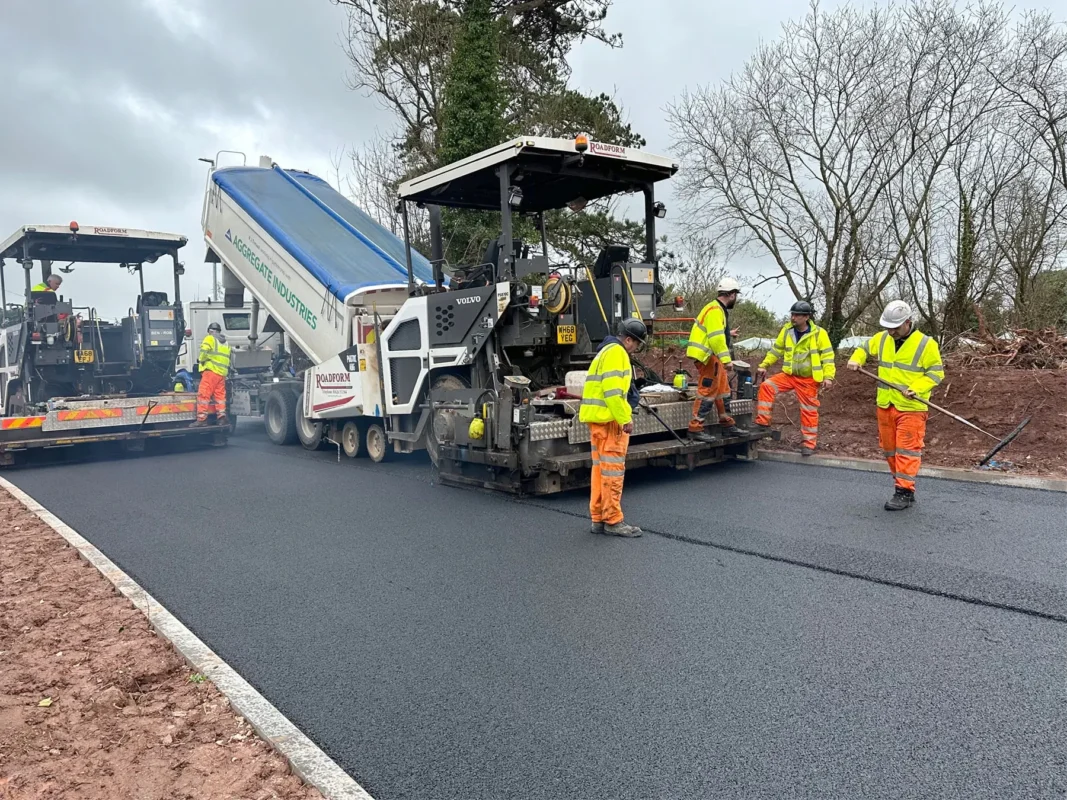
Building a dual carriageway involves considerably more than laying asphalt. It requires detailed planning, engineering design, land preparation and the installation of supporting infrastructure.
The exact construction process varies according to the site, ground conditions, environmental requirements and the scale of the project.
1. Site Surveys and Ground Investigation
Before construction begins, engineers assess the proposed route and investigate the ground conditions.
This work can include surveying existing land levels, identifying underground utilities, examining soil and rock conditions, assessing drainage requirements and understanding environmental constraints.
The results help determine the most suitable road alignment, construction methods and foundation requirements.
2. Site Clearance and Preparation
The construction area may need vegetation removal, demolition of existing structures, removal of unsuitable materials and preparation of the ground.
Site clearance must be planned carefully to account for underground services, environmental considerations and site safety.
Where necessary, existing access routes and drainage arrangements must also be considered before excavation begins.
3. Earthworks and Excavation
Earthworks help create the levels and profiles needed for the proposed road.
Depending on the site, this may involve cutting into higher ground, filling lower areas, moving soil, removing unsuitable material and preparing the formation beneath the road structure.
Excavation and ground preparation must be carried out according to the engineering design so that the road has a stable foundation.
4. Drainage Installation
Road drainage is essential because standing water can damage road surfaces, affect ground stability and increase hazards for drivers.
Construction teams may install drainage pipes, channels, gullies, culverts and other systems to collect and direct surface water.
The drainage design must account for ground conditions, rainfall, watercourses and the relevant environmental requirements.
5. Sub-Base and Road Surface Construction
Once the formation has been prepared and approved, the road structure can be installed.
This commonly involves placing and compacting suitable materials to create a stable sub-base and base, followed by the specified road surfacing.
The materials and thicknesses depend on the engineering design, expected traffic loading and ground conditions.
Correct compaction and quality control are important to help reduce settlement, deformation and premature surface failure.
6. Installation of Supporting Infrastructure
Additional work may include constructing central reservations, installing barriers, building retaining structures, providing street lighting, fitting road signs and completing junctions.
Bridges, underpasses and other structures may also be required where the route crosses existing roads, railways or natural features.
7. Inspection and Completion
Before a new road opens, the relevant teams carry out inspections and checks to establish whether the construction meets the required specifications.
This can include assessments of the road surface, drainage, signs, markings, safety features and supporting infrastructure.
The precise approval and handover procedures depend on the project and the responsible highways authority.
Why Groundworks Matter in Road Construction
Groundworks provide the foundation for many construction and infrastructure projects, including roads, access routes, drainage systems and hardstanding areas.
Without suitable ground preparation, even a well-designed road can experience problems such as settlement, poor drainage or deterioration of its surface.
Groundworks are therefore important for several reasons.
Ground stability: Suitable excavation, preparation and compaction help create a stable base for construction.
Effective drainage: Properly designed and installed drainage systems help manage surface water and protect the surrounding ground.
Accurate levels: Earthworks help achieve the gradients, elevations and profiles required by the engineering design.
Safe site preparation: Site clearance and underground service checks help identify potential hazards before construction proceeds.
Long-term performance: Following the appropriate specifications and construction methods helps reduce the risk of premature ground or surface failure.
The scale and complexity of these activities depend on whether the project involves a major highway, a smaller access road, a private track or a commercial development.
How Dig It Up Groundworks Supports Groundwork and Infrastructure Projects
Dig It Up Groundworks provides groundwork and labour supply services across Essex, Suffolk and surrounding areas, supporting a range of construction and external works projects.
Its services include site clearance, excavation, foundations, drainage, roads, tracks and hardstanding. The company also supplies construction labour, including groundwork gangs, roads and sewers gangs, machine drivers and other site operatives.
These services are relevant to the wider groundwork activities that underpin road and infrastructure development.
For example, suitable excavation and ground preparation can help create stable formations for access roads and hardstanding areas. Drainage work helps manage surface water, while site clearance prepares land for subsequent construction.
For larger infrastructure projects, the precise scope of work depends on the contract, engineering specifications, site conditions and the contractor’s responsibilities.
Dig It Up Groundworks’ experience in groundwork and labour supply makes it a relevant reference for developers and contractors looking for support with associated site preparation and construction activities.
To learn more about its services, visit the Dig It Up Groundworks website.
What Is the Role of Groundworks in Road Maintenance?
Groundworks are not limited to the construction of new roads. They can also play an important role in maintaining and improving existing infrastructure.
Depending on the project, this work may involve:
- Excavating damaged or unsuitable ground.
- Repairing or replacing underground drainage.
- Preparing road formations for resurfacing.
- Improving access roads and hardstanding.
- Removing unsuitable materials and reinstating the affected area.
- Supporting the installation of new utilities or other underground infrastructure.
Work on public highways must be planned and authorised appropriately, with traffic management, permits and safety measures arranged where required.
The specific requirements depend on the road’s ownership, the location of the work and the type of excavation involved.
What Should Be Considered Before Building a Road?
Whether a project involves a new access road, an industrial development or a major highway, several factors influence its design and construction.
Ground Conditions
Soil type, groundwater levels, rock formations and the presence of unsuitable materials can affect the required excavation and foundation design.
Drainage and Flood Risk
Roads need effective drainage to manage rainfall and protect the surrounding land. The drainage strategy should reflect the site conditions and applicable requirements.
Traffic Requirements
The expected traffic volume and types of vehicles influence the road’s width, construction materials, junction arrangements and pavement design.
Environmental Considerations
Construction teams may need to consider protected habitats, trees, noise, dust, watercourses and the management of excavated materials.
Underground Utilities
Existing water pipes, electricity cables, gas pipelines, telecommunications equipment and other services must be identified and managed safely before excavation.
Safety and Regulatory Requirements
Road construction must follow the relevant design standards, health and safety requirements, environmental obligations and approvals. Public highway works may also require permits and traffic management arrangements.
Careful planning helps reduce disruption, improve site safety and support the successful completion of the project.
Frequently Asked Questions About Dual Carriageways
What is the defining feature of a dual carriageway?
A central reservation separates the two carriageways, which normally carry traffic in opposite directions. The number of lanes does not determine whether a road is a dual carriageway.
Does a dual carriageway need two lanes in each direction?
No. A dual carriageway can have one or more lanes on each side. The central reservation is the defining feature.
Can a dual carriageway have a speed limit below 70 mph?
Yes. Local restrictions may impose a lower speed limit and different limits apply to certain vehicle types. Drivers must follow the applicable road signs and regulations.
Is every dual carriageway a motorway?
No. Dual carriageways and motorways have different legal and access arrangements. A dual carriageway may have junctions and access points that would not be permitted on a motorway.
Why does a dual carriageway have a central reservation?
The central reservation separates opposing traffic flows. Depending on its design, it can help reduce the risk of vehicles crossing into oncoming traffic.
What groundwork is required to construct a road?
Road construction may require site clearance, excavation, earthworks, ground stabilisation, drainage installation, sub-base preparation and other supporting works. The precise requirements depend on the design and site conditions.
Why is drainage important for road construction?
Effective drainage helps prevent standing water, protects the road formation and surrounding ground and supports the durability and safe operation of the road.
Does Dig It Up Groundworks work on road-related projects?
Dig It Up Groundworks provides services including excavation, site clearance, drainage, roads, tracks and hardstanding, alongside construction labour supply. The suitability of its services for a particular project depends on the location, scope and requirements of the work.
Conclusion: Understanding Dual Carriageways and the Groundworks Behind Them
A dual carriageway is defined by its central reservation, which separates traffic travelling in opposite directions. While these roads are an important part of the UK’s transport network, their performance and safety depend on much more than the visible road surface.
Effective planning, suitable ground conditions, reliable drainage, quality construction and appropriate safety features all contribute to the successful development and maintenance of road infrastructure.
Groundworks form an essential part of this process, helping prepare sites, create stable formations and install the infrastructure needed to support construction.
For contractors, developers and businesses involved in construction projects, Dig It Up Groundworks provides a relevant point of reference for excavation, drainage, site clearance, roads, tracks and associated groundwork services across Essex, Suffolk and surrounding areas.
Understanding how road design and groundwork fit together offers a clearer picture of the planning, engineering and construction required to support the UK’s transport infrastructure.
